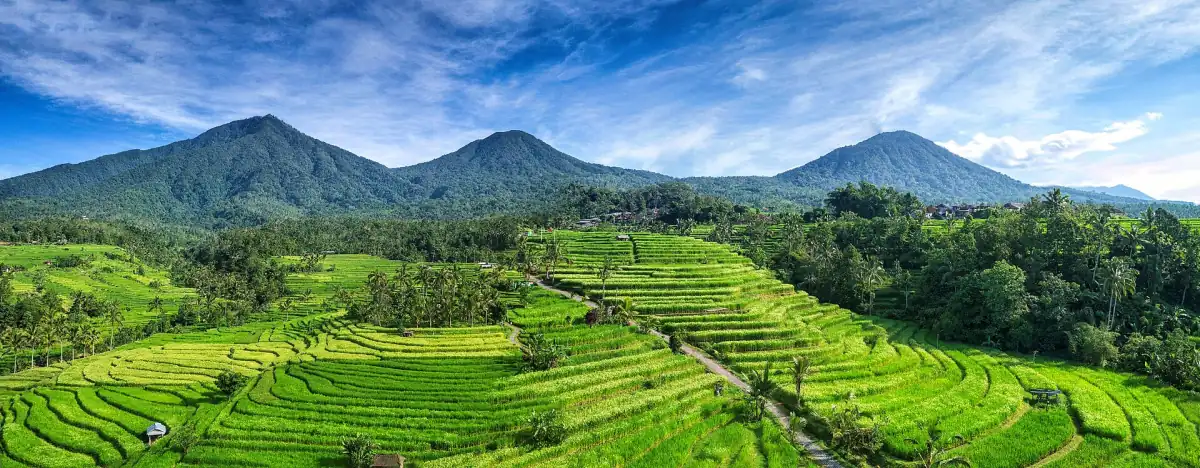
Understanding Jatiluwih history through Subak
Jatiluwih history is the story of a working agricultural landscape shaped by shared water management. The village lies in Penebel, Tabanan, on Bali, on the slopes of Batukaru. The terraces belong to a landscape in which farming, community organisation and religious practice are connected. Looking beyond the field colours helps explain why the channels and temples matter as much as the views.
Subak in Bali brings farmers together to manage water for rice cultivation. Its history reaches back to the ninth century in the UNESCO account of the wider system. That history describes a continuing relationship between communities and their environment, rather than a single construction date for every terrace in Jatiluwih. Start with the rice terrace overview for practical visiting information.

Shared water management with channels and weirs
Jatiluwih's Subak system combines channels and weirs with collective decisions by farming groups. Water management is therefore both physical infrastructure and a way of organising cultivation. The visible channels are part of the work of growing rice, rather than decorative features beside a walking route.
Watch the landscape from the marked paths without interfering with water channels or plants. A field edge can also be part of the cultivated area, so follow the visitor route instead of stepping into crops for a photograph. Leave plants where they grow and carry your rubbish away. The walking guide explains the marked routes and guided alternatives.
Explore Subak on a walk
This sunrise walk includes an explanation of the Subak irrigation system.
Hand-picked tours, booked through GetYourGuide. Prices are indicative starting prices in US dollars (as of November 2026). Tap a tour for live availability and the current price in your currency.

Learn about Subak on a guided walk
A sunrise walking experience combines explanations of irrigation, local plants and Balinese cultural stories with private hotel transfers and admission.
Tri Hita Karana and water temples
Tri Hita Karana connects the spiritual world, human community and nature within the Subak landscape. Water temples and farming rituals belong to this relationship. Understanding the philosophy gives the terraces a different context: cultivation involves cooperation and religious life as well as the flow of water across a hillside.
A guided sunrise walk includes explanations of the irrigation system, stories about local culture, Balinese mythology and Dewi Sri, the rice goddess. The experience also introduces wild local plants used in daily Balinese life. Private hotel pickup and drop-off, a local driver-guide, drinking water and the entrance ticket are included; meals and snacks are extra. Arrange the access and timing for this specific sunrise experience, as regular visitor hours are 08:00 to 18:00 WITA.
A UNESCO cultural landscape since 2012
Jatiluwih forms part of Bali's serial Subak cultural landscape inscribed on the UNESCO World Heritage List in 2012. The designation recognises the relationship between rice cultivation, water management and Tri Hita Karana. Think of the terraces as one part of a wider cultural landscape, with several components across Bali.
The inscription concerns cultural landscape heritage. Its overall land area covers the complete serial property across Bali, rather than Jatiluwih alone. The water-temple names also need care: Ulun Danu Batur and Ulun Danu Beratan are different destinations. For a visit combining these terraces with the temple at Lake Beratan, use the Beratan combination guide.
Rice varieties and agricultural rituals
Jatiluwih's red and white rice connect different growing cycles with agricultural rituals. Mapag Toyo takes place before soil preparation, Nandur accompanies planting, and thanksgiving rituals follow storage of the harvest. These practices place the visible work in the fields within the community's religious calendar.
Planting, growth, grain formation and harvest change the appearance of the terraces. Local water availability can shift those stages, so a cultural calendar should not become a fixed schedule for photographs or ceremonies. Use the rice season and visiting-time guide to plan around those differences. At sacred areas, follow local guidance and enter only with accompaniment where required.
Questions about Jatiluwih's cultural landscape
What is Subak?
Subak is the communal water-management system linking Jatiluwih's rice farming with channels, weirs and water temples. Farming groups organise water sharing, while Tri Hita Karana connects spiritual life, the community and nature. The terraces remain agricultural land, so visitors should stay on marked paths and respect cultivation.
When did the landscape become UNESCO World Heritage?
2012 is the inscription year for Bali's serial Subak cultural landscape, which includes Jatiluwih's wider cultural setting. The recognition concerns an interconnected landscape of agriculture, water management and religious practice. Measurements of the complete UNESCO property describe all its components together, rather than the Jatiluwih visitor area alone.
How can I learn about irrigation during a visit?
The guided Jatiluwih sunrise walk includes explanations of Subak irrigation, cultural stories and plants used in Balinese daily life. Private hotel transfers and admission are included, while meals are extra. Arrange the specific sunrise access and timing with the organiser rather than relying on regular daytime opening hours.