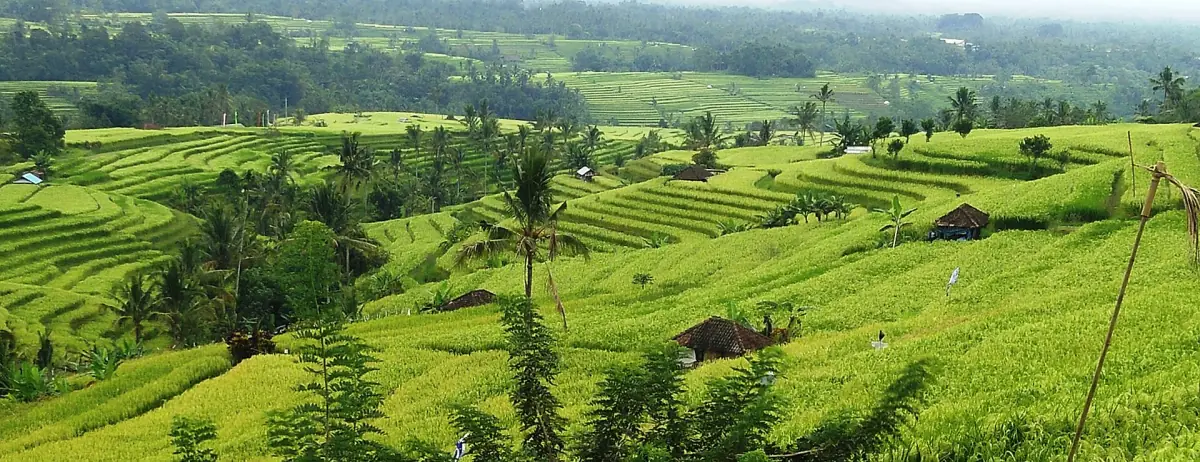
Choosing the best time to visit Jatiluwih
The best time to visit Jatiluwih is a date that suits your walking plans, the current weather and the farming stage you want to see. Field colours follow the cultivation stage of each plot. Jatiluwih is a working rice landscape in Tabanan, on the slopes of Batukaru, with planting and harvest shaped by local water availability.
Separate three decisions: when to travel, what the rice may look like, and how much time to allow on the day. A clear photograph of green terraces is one moment in the farming cycle. Recently planted or harvested fields show other parts of the same landscape. Read the Subak history guide for the connection between shared water, cultivation and rituals.

Mountain weather and planning the day
Jatiluwih's mountain-slope setting calls for a day plan that can respond to the weather. The village profile gives an approximate elevation of 685 m, a description of the village rather than every path. Use a local forecast close to the visit and allow room to shorten or adjust the walking part if conditions change.
Regular visitor hours are 08:00 to 18:00 WITA in the information read on 15 November 2026. Match your arrival to the route rather than to a sunrise photograph: the red trail is listed at 1 hour, the white at 2 hours and the blue at 4 hours for 7 km. The walking page explains all five marked options. Ask locally about access and accompaniment, and keep to marked routes.
Terraces and a coastal evening
This day trip combines Jatiluwih with a sunset stop at Tanah Lot.
Hand-picked tours, booked through GetYourGuide. Prices are indicative starting prices in US dollars (as of November 2026). Tap a tour for live availability and the current price in your currency.

Combine the terraces with a coastal evening
A Jatiluwih and Tanah Lot day includes hotel transfers and an English-speaking driver-guide, with admission and lunch depending on the selected option.
Planting, growth and harvest
Jatiluwih's rice changes from planting through leafy growth and grain formation to harvest and soil preparation. These stages explain why two visits can produce very different views. The terraces are cultivated fields, and water availability and local planting decisions matter alongside the season.
The farming rhythm also has a cultural dimension. Mapag Toyo precedes soil preparation, Nandur accompanies planting, and harvest thanksgiving follows storage. These are agricultural and religious practices, rather than visitor performances with a fixed timetable. Respect any local instructions around ceremonies, stay out of planted fields and leave plants untouched.
A report dated 5 November 2026 described white-rice planting in part of Gunung Sari being delayed from August to October because of reduced spring flow. That was a local observation for that year's cultivation, not a new calendar for every field in Jatiluwih. Use it as a reason to ask about the current stage near your visit.
A seasonal calendar without a colour guarantee
Jatiluwih's published seasonal calendar is a guide to agricultural phases, rather than a forecast for each plot. The version carrying a 2025 festival reference describes the following sequence. Use it to understand the cycle, then seek recent information about the fields you intend to visit.
| Calendar period | Described farming phase |
|---|---|
| January | Red-rice planting begins |
| February to April | Growth and green fields |
| May to July | Grain formation, golden fields, then harvest |
| August | Ploughing and renewed planting |
| September to November | Growth, then a golden phase |
| December | Harvest completed; ploughing towards month-end |
The calendar's golden phases and harvest months describe the published pattern. They should not decide a non-flexible photography trip without a recent local update. A visit can still focus on the irrigation system, village landscape or guided cultural explanation when individual fields are between crops.
Build daylight and transport into your itinerary
Jatiluwih needs travel time as well as time in the terraces: the approximate car journey from Ubud is 1 hour 30 minutes each way. A long marked walk therefore asks for a different day plan from a short terrace visit with other stops. Arrange your return and consult the driving estimates before choosing a route.
A flexible day outing combines Jatiluwih with a sunset finish at Tanah Lot on the coast. Hotel pickup and drop-off and an English-speaking driver-guide are included; all entrance fees and lunch depend on the option selected. The coastal evening is a separate stop from the rice terraces, with the view dependent on conditions. Compare this itinerary with other Jatiluwih excursions if you prefer several visits to a long walk.
Questions about rice seasons and visiting time
Which month guarantees green terraces?
Jatiluwih's field colours follow the cultivation stage of each plot, so choose a month as an indication rather than a colour promise. The published calendar describes green growth in parts of the cycle, but local water supply can change planting. Ask about recent field conditions if photography is your main aim.
When can I visit during the day?
08:00 to 18:00 WITA are Jatiluwih's regular visitor hours in the information read on 15 November 2026. Choose your arrival around the walking route and return journey. A specific guided sunrise arrangement needs its own access and timing discussion; regular opening hours alone do not provide early entry.
Can I combine Jatiluwih with a sunset outing?
Yes, a Jatiluwih and Tanah Lot day combines the terraces with a coastal sunset finish. Hotel transport and an English-speaking driver-guide are included, while entrance fees and lunch depend on your selected option. Tanah Lot is the evening coastal stop, and the sunset view depends on the weather.